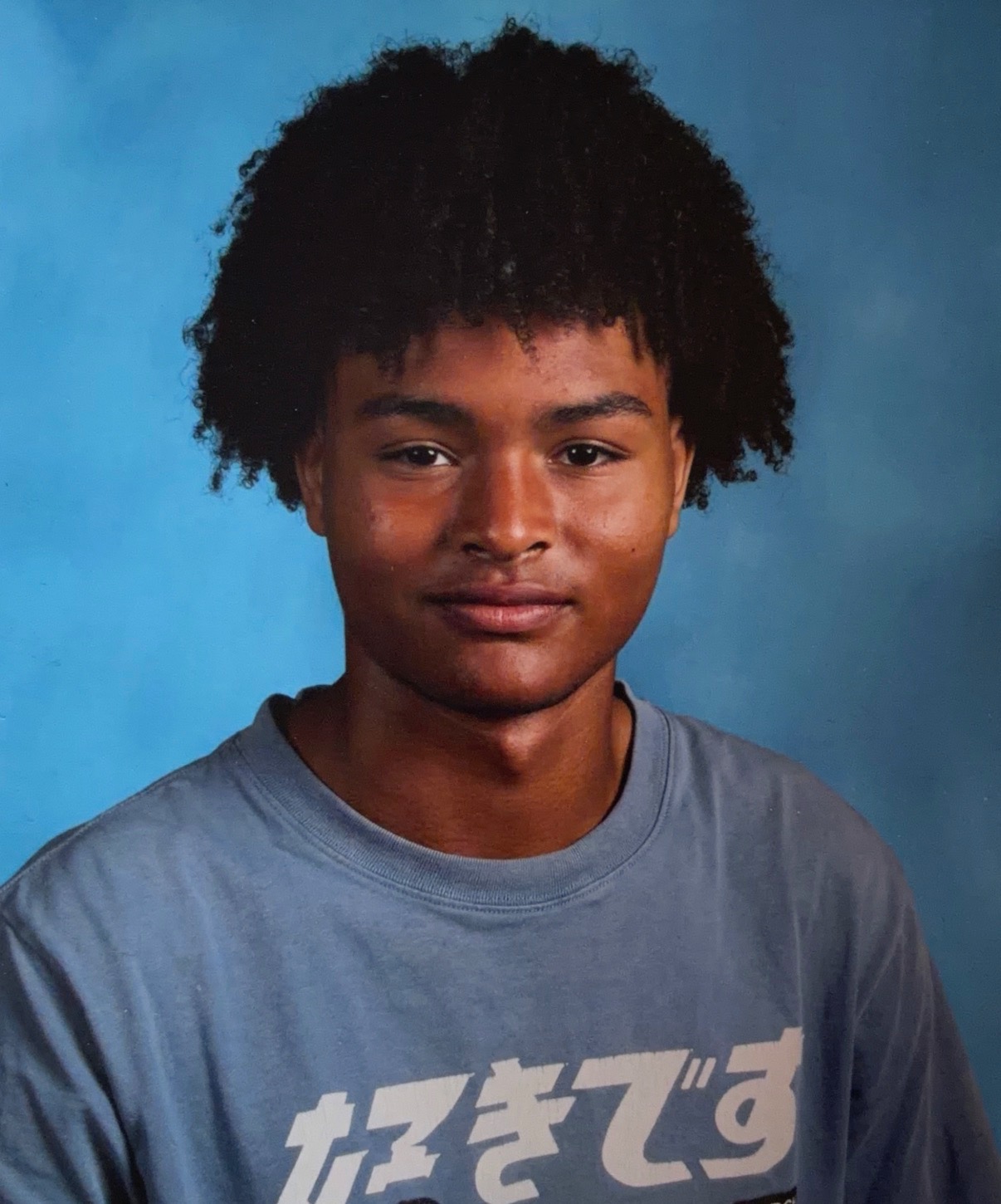
Senior at The Bronx High School of Science. When I'm not in class or
in the lab, you'll find me playing pickup soccer with my friends,
grinding Rocket League, a game where cars play soccer, or researching
how Napoleon brought Europe to its knees.
I grew up between France and the United States, which shaped the way
I move through most things: switching languages mid-sentence,
adapting quickly, and being able to connect with people.
Most of the research I have done traces back to when Dr. Yan Yu took
a high school student under her wing at St. John's University. She
taught me what her data actually meant and why it mattered, how to
work with it, and how to turn it into something with an impact.
Through her lessons I have been able to apply the same principles to
research well outside her field of neuroscience.
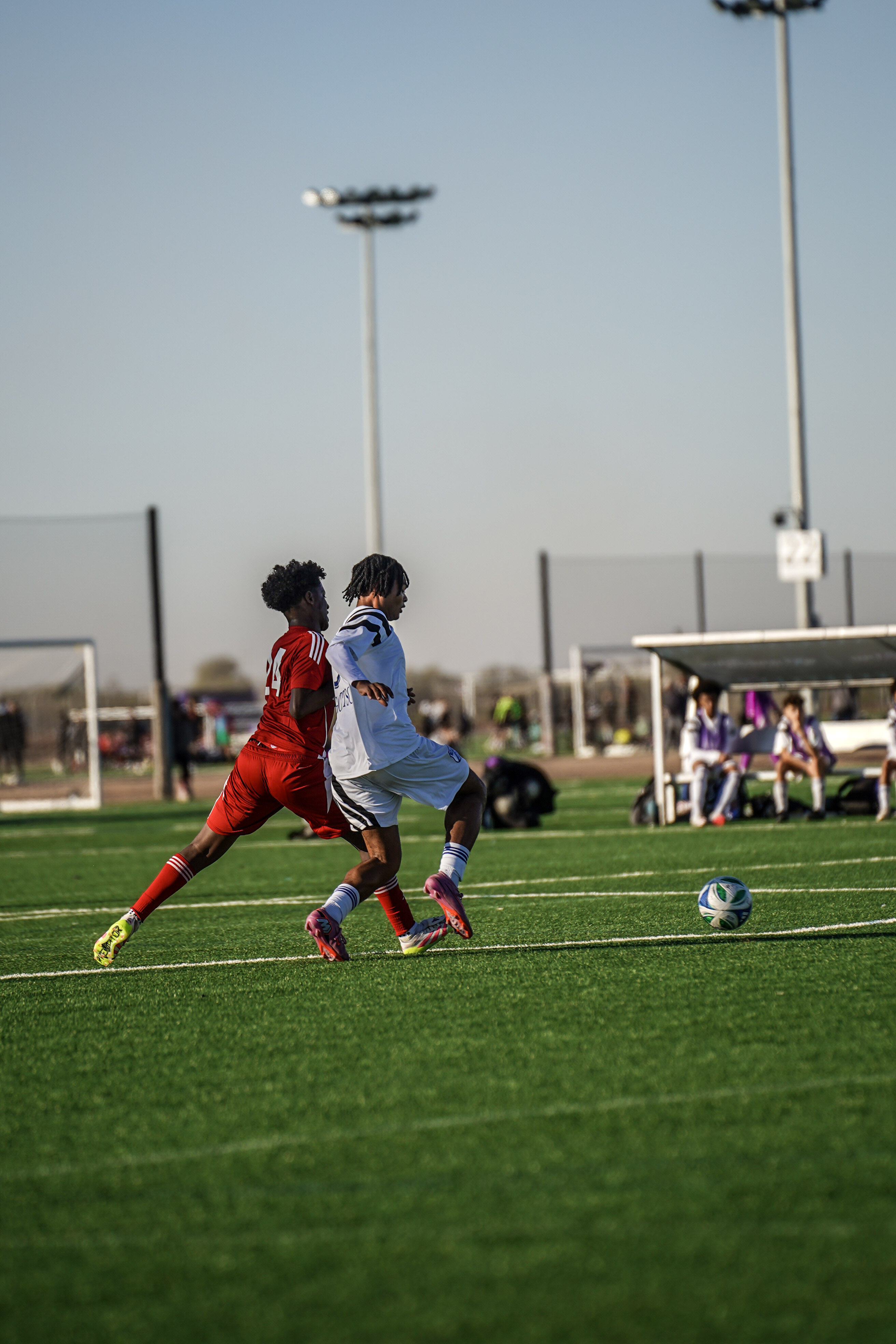
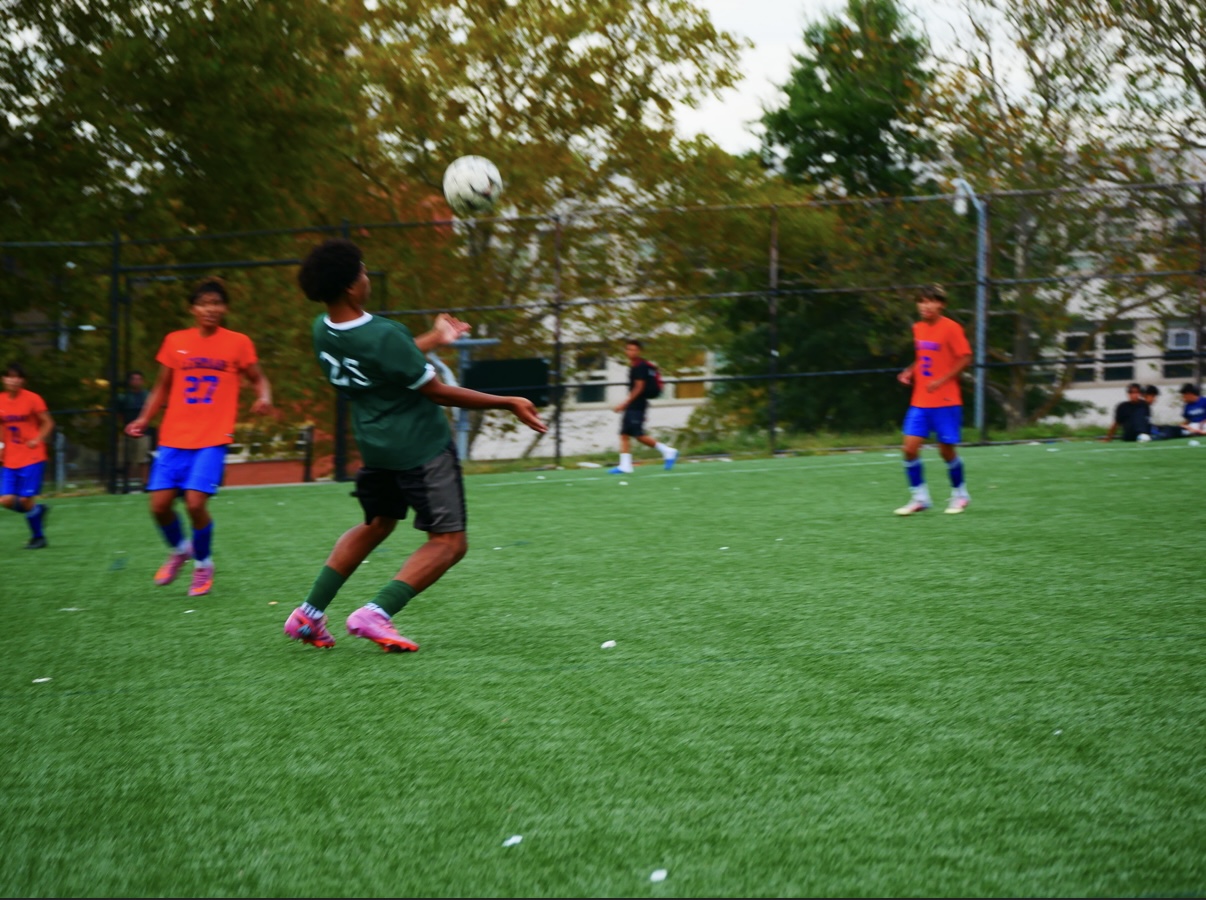
Outside of that, I play forward in MLS Next for Metropolitan Oval
Academy and captain the varsity team at Bronx Science, where I was
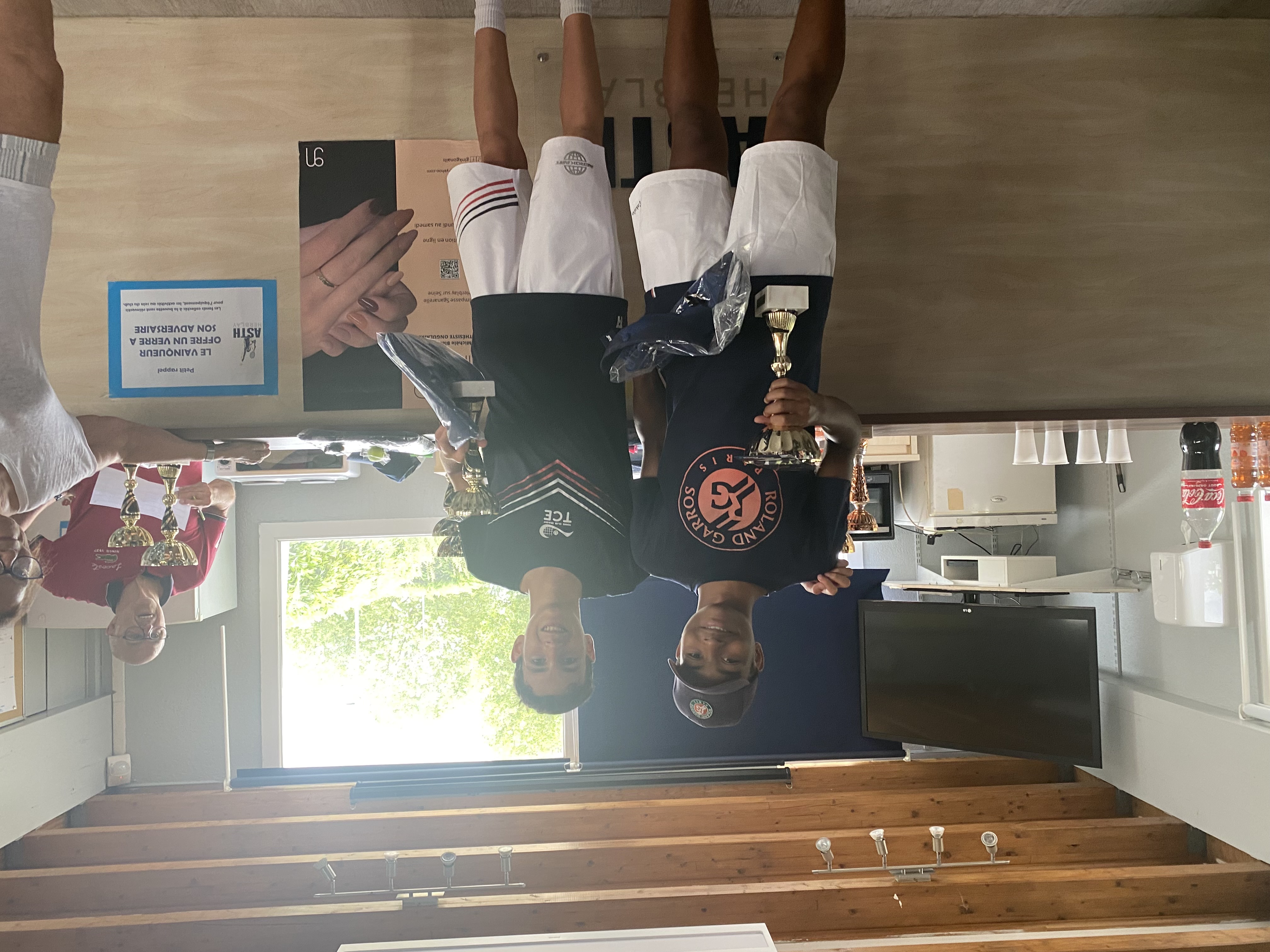
top scorer last season. I am co-captain of the varsity tennis team
and a longtime violinist and pianist.
02
Academics
Two diplomas in parallel, and a course load built around mathematics,
physics, and computation.
The Bronx High School of Science
New York, NY · Expected June 2027
GPA 96 / 100 unweighted
ACT 36 Composite
ACT sections Math 36 · Reading 36 · English 35 · Science 35
Track Math & CS Research Program
Four-year selective research track. Senior coursework includes
Ordinary Differential Equations, AP Physics C: Mechanics, AP
Statistics, AP Macroeconomics and Microeconomics, and AP English
Literature.
French Baccalauréat
CNED, France · Expected June 2027
Format Fully self-studied
Status Première exams completed
Hours 4 hrs/week, grades 9 to 12
Complete French national curriculum in literature, history, and
mathematics, carried in tandem with the U.S. diploma across all four
years of high school.
Advanced Placement
5 Calculus BC
5 Physics 1
5 Chemistry
5 English Language
5 Spanish Language
4 U.S. History
4 European History
AP Scholar with Distinction. Five additional exams scheduled for May 2027.
Training & Programs
2024–25
AI Scholars Program, Inspirit AI
Supervised machine learning, CNNs, and data pipelines with Stanford
and MIT researchers, followed by one-on-one research mentorship on
EEG machine learning analysis.
2025
Qubit by Qubit, The Coding School
Quantum computing course covering qubits, gates, entanglement, and quantum algorithms.
2024
Summer Finance Institute, Fordham Gabelli School of Business
Financial analysis, markets, and corporate valuation.
03
Research Experience
Computational neuroscience, quantum information, and quantitative
methods.
Lead project on machine learning analysis of musical pitch and rhythm
processing in bilingual and monolingual children. I analyze
resting-state and speech EEG, handling artifact rejection, filtering,
and baseline correction, then extract ERPs and oscillatory features.
I map neural coherence and network development using BESA and wavelet
analysis, and train supervised models in scikit-learn to predict
detection accuracy directly from EEG.
EEGscikit-learnBESARegeneron STS 2026
May 2026
Lead Author & Presenter, 190th Meeting
Acoustical Society of America · Philadelphia
With Anita Hyseni, Michael Yushavaiev, Benjamin Lee, Elizabeth Dickey,
and Dr. Yan Yu · J. Acoust. Soc. Am. 159(4), Pt. 2, A157
Music and language experience both shape auditory development, but it
remains unclear how language background specifically affects music
processing. Children aged five to ten from Mandarin, Spanish, French,
Standard American English, and African American English speaking
households completed a passive listening oddball task covering six
kinds of musical change: intensity, pitch, rhythm, timbre, slide, and
location. Event-related potentials were recorded from 65 scalp sites
and connectivity was analyzed across frequency bands from 1 to 40 Hz.
I then used those functional connectivity measures as input features
for classification models trained to distinguish children by language
background, comparing support vector machines, random forests, and
neural networks across acoustic features. The models captured real
differences in connectivity patterns, which suggests language
background leaves a measurable mark on how music processing networks
develop.
Stevens Institute of Technology · Prof. Florescu and Prof. Bozdog
Selected for an intensive four-week research course applying
mathematical models and data analysis to financial markets and
quantitative trading strategies, covering R and RStudio alongside
Bloomberg Market Concepts and Capital IQ Pro certifications. I carried
a group assignment from the course forward into a paper of my own,
asking whether Tesla's well known volatility actually pays investors
for the risk it imposes.
Working in R with roughly 2,190 trading days of log returns for TSLA,
IBM, and SPY from 2018 onward, I found Tesla's return variance runs
about four times IBM's, which an F-test confirms, and a GARCH(1,1)
model shows that volatility is not only higher but less predictable
period to period. The surprise came in the regressions. IBM on its own
is a significant positive predictor of Tesla's daily return, but once
SPY enters the model the coefficient flips negative and stays
significant, so the two are not linked to each other at all; they
simply react to the same market in opposite directions.
None of Tesla's extra risk looks well compensated. Its Sharpe ratio
falls below IBM's in many quarters, its worst peak-to-trough drawdown
reaches 80 percent against IBM's 43, and its beta climbs from 1.33 to
2.26 across the sample rather than settling as the company matures.
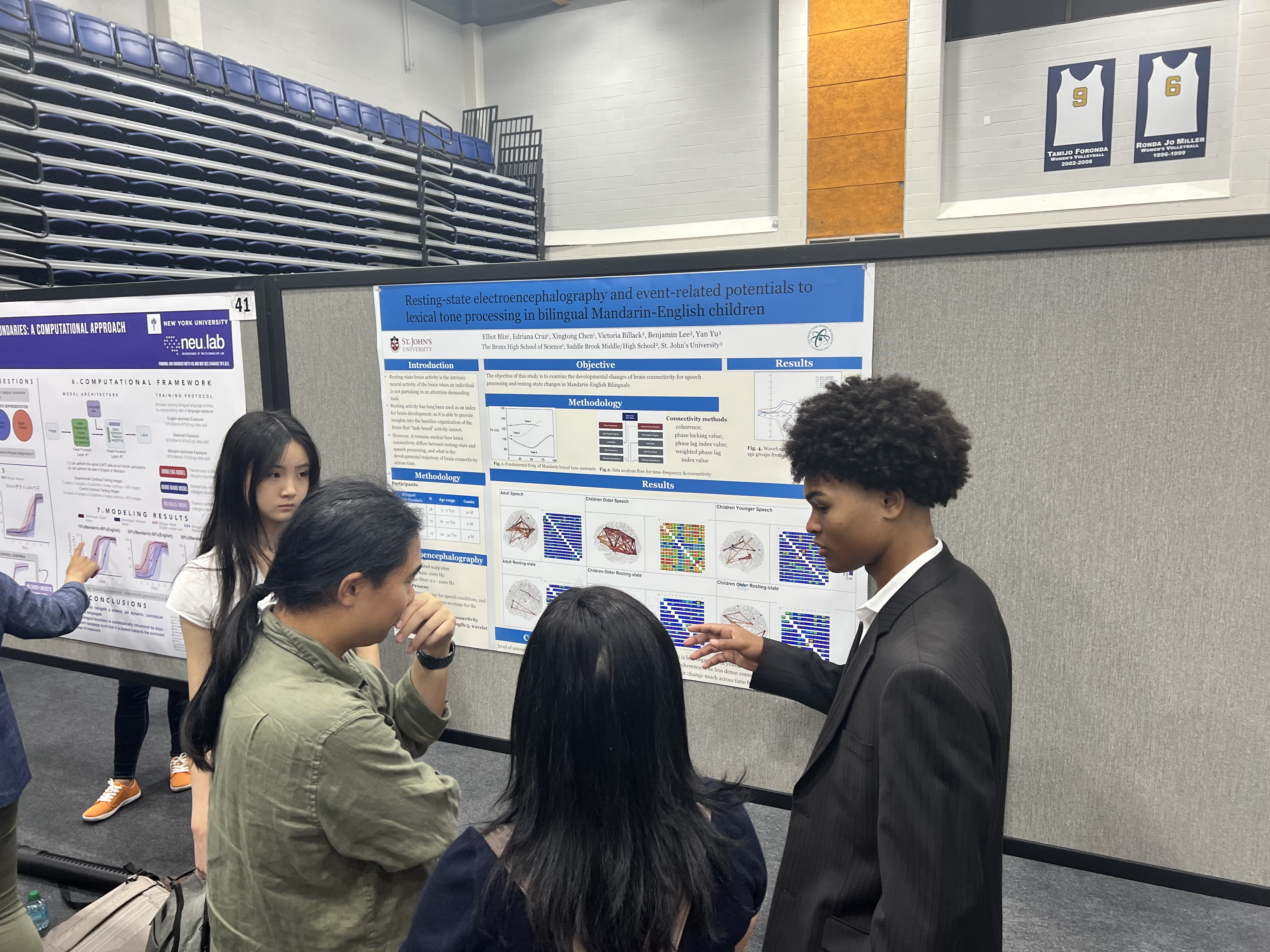
Society for the Neurobiology of Language · Gallaudet University
With Edriana Cruz, Xingtong Chen, Victoria Billack, Benjamin Lee, and
Dr. Yan Yu
Mandarin uses pitch contour to carry word meaning, so tone perception
puts unusual demands on neural timing. I asked how those networks
mature in bilingual Mandarin-English speakers, comparing participants
across three age groups: children aged 5 to 7, children aged 8 to 10,
and adults. Each completed a passive lexical tone listening task and a
resting-state recording on a 65-channel EEG system sampled at 1000 Hz,
analyzed with coherence and phase-locking value.
The trajectory turned out to be non-linear. Older children showed the
strongest and most widespread connectivity, stronger than adults,
whose sparser networks likely reflect greater automaticity in speech
processing rather than immaturity. Resting-state coherence barely
changed from early childhood to adulthood, which means task-based EEG
is the more sensitive measure of developmental change. All data were
collected under an approved IRB protocol.
Walking attendees through resting-state and speech connectivity
results in Mandarin-English bilingual children.
The Coding School · Mentor: Dr. James D. Whitfield
With Dylan Burrell-Jones and Amara Ferguson
An entanglement witness can tell an entangled state from a separable
one without reconstructing the full density matrix, which makes it
appealing for real hardware. We asked how much noise it takes to break
that. In Cirq we prepared a Φ+ Bell state, measured correlations along
the X, Y, and Z axes, and evaluated the witness as one minus the sum of
those three expectation values, where a negative result confirms
entanglement. Every trial ran 1,000 shots, repeated three times at each
depolarizing noise level from 5 to 25 percent.
The witness held at 5 percent noise and barely survived at 15 percent,
then failed at 25 percent by calling a genuinely entangled state
separable. That puts the failure threshold between 15 and 25 percent.
One pattern was worth the whole project: the Z component stayed
consistently stronger than X and Y, because a Φ+ state is already
aligned with the Z axis and needs no rotation gate to measure. A single
extra gate per qubit was enough to measurably degrade the result, which
is a concrete argument against relying on witnesses in NISQ devices.
In the same program I also simulated Grover's search algorithm combined
with BB84 quantum key distribution, running those circuits on IBM
quantum hardware and analyzing decoherence and measurement noise.
Wildfire Detection Using Convolutional Neural Networks
With Shaunak Thamke and Kevin Diao · International Journal of
High School Research, 2026
We built a CNN in TensorFlow to classify 2,700 aerial and
ground-level images as fire or no-fire, then tested how dataset
size, training epochs, and image resolution each affect detection
accuracy. Accuracy climbed steadily with dataset size, from chance
level on 10 images to roughly 75 percent on 700, with the best runs
classifying the test set perfectly from epoch 15 onward.
The result we did not expect: 100x100 pixel images outperformed both
10x10 and 250x250. Higher resolution is usually assumed to help, but
past a point the added detail introduced noise rather than signal.
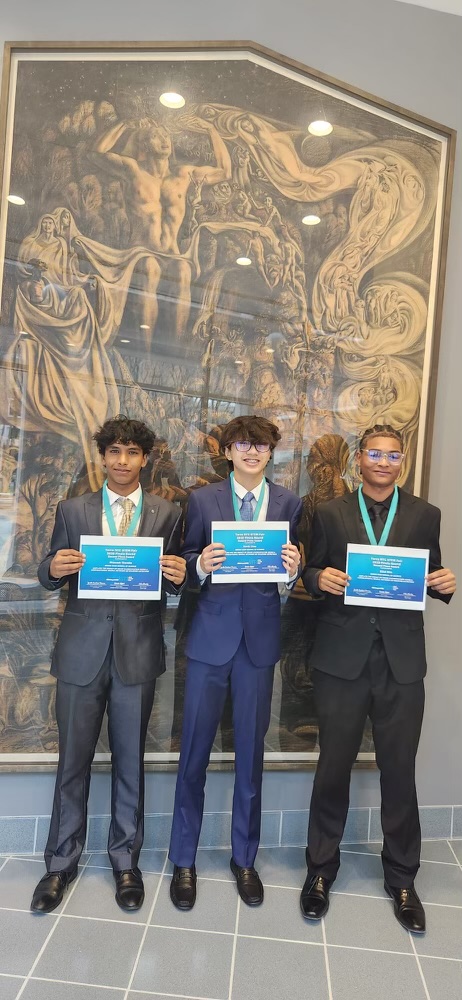
The project took 2nd place at the Terra NYC STEM Fair, an
ISEF-affiliated regional championship, and was submitted to the
Conrad Challenge.
Ongoing Regeneron STS project asking whether language background
shapes how children process music, using connectivity features from
EEG as inputs to classification models. Presented at the Acoustical
Society of America in 2026.
Simulated Bell states in Cirq across noise levels from 5 to 25 percent
to find where entanglement witnesses stop working, and traced the
asymmetry between measurement axes back to a single extra rotation
gate.
Eight years of daily returns in R, tested with an F-test, GARCH(1,1),
CAPM, and mean-variance portfolio theory. Tesla carries four times
IBM's variance without the risk-adjusted return to justify it, and its
apparent link to IBM reverses once the market is controlled for.
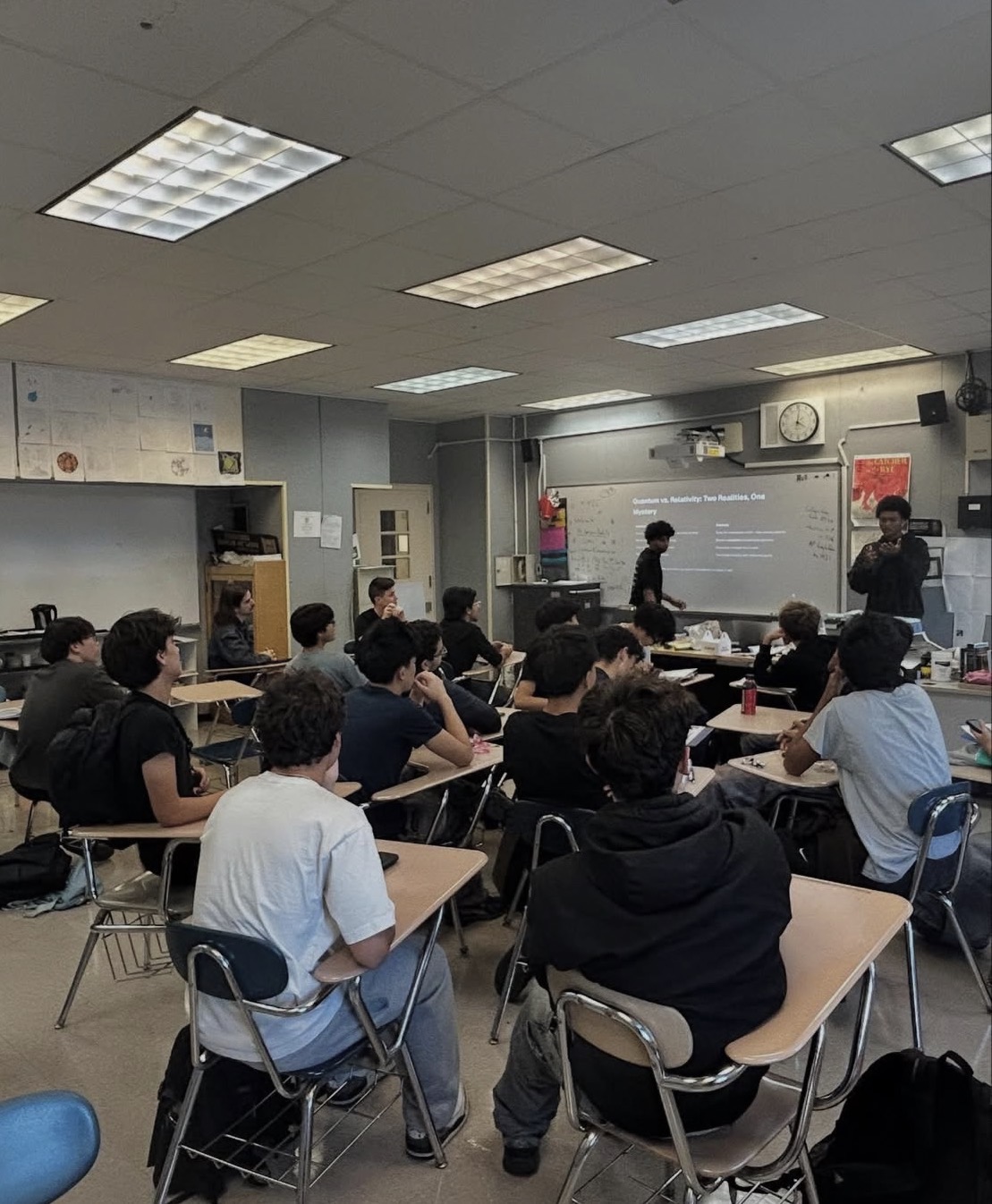
Founded and lead a club of more than 20 members. I run weekly lectures
on superposition, entanglement, and where quantum mechanics collides
with relativity, design Python and Qiskit coding workshops, and
coordinate guest speakers.
Service
SHSAT Tutoring
Tutored Bronx middle schoolers preparing for the SHSAT through the
Science for Bronx Club, roughly four hours a week across two years.
Three of us were often responsible for twenty-five to thirty students
at once, and one-on-one help did not scale: sessions ran chaotic and
most questions went unanswered.
I pushed the club toward small rotating groups instead, each session
built around a single math or reading skill and planned in advance
rather than improvised. Students engaged more, could track their own
progress, and needed less hand-holding as they worked through practice
problems. The model held as membership grew.
Leadership
Student Senator & Model UN
As a Bronx Science Senator in grades 10 and 12, I built a shared
resource guide for my classmates: one place to compare the school's
clubs and activities, and a practical walkthrough for finding research
internships with university professors.
I started Model UN on the novice team and competed on varsity from
grades 10 through 12. At StuyMUN I represented France in a committee
debating the costs of colonialism, a difficult seat for a former
colonial power. Instead of defending France's position outright, I
worked toward a middle ground that both former colonizers and
formerly colonized nations could accept, and was named Honorable
Delegate. I also helped organize SciMUN competitions.
05
Beyond the Lab
Soccer, tennis, and twenty-two years of instruments between two hands.
Highlight reel. Forward and attacking midfielder, MLS Next and Bronx
Science varsity.
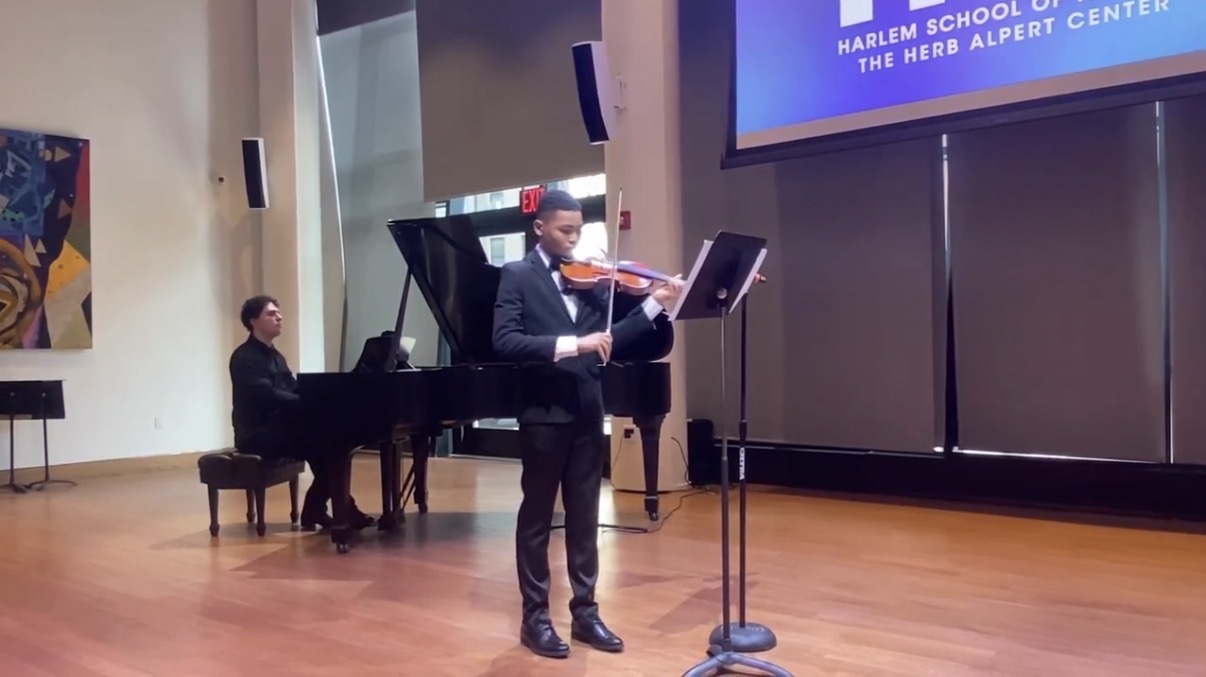
Antonio Vivaldi, Violin Concerto in A minor, Op. 3 No. 6, RV 356,
first movement. Harlem School of the Arts.
MLS Next
Forward and attacking midfielder, Metropolitan Oval Academy in the
Homegrown Division, previously Blau Weiss Gottschee. Four training
sessions a week and national travel.
Varsity Captain
Bronx Science, grades 11 and 12. Top goalscorer with 9 goals in 2025.
Tennis
Varsity co-captain at UTR 8. Tournament title at ASTH Herblay in
France, alongside regional junior circuits in the U.S.
Violin
Twelve years, trained at the Harlem School of the Arts. Showcases,
ensemble concerts, and local gigs around New York.
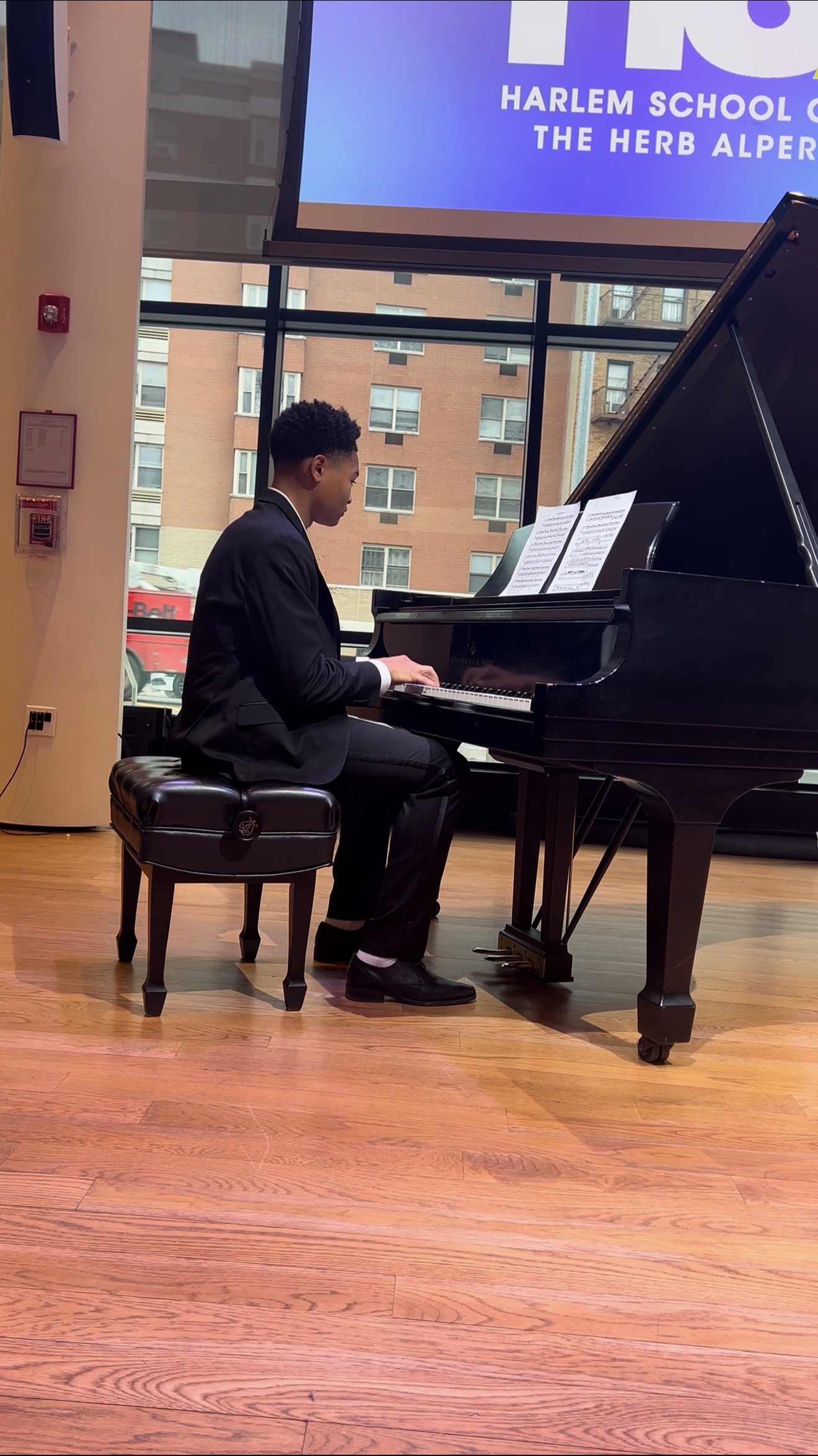
Piano
Ten years, performing at the Herb Alpert Center at the Harlem School
of the Arts.
06
Honors & Awards
2026
Published Author, International Journal of High School Research
The Impact of Image Classification Using CNN on Wildfire Detection
2026
Lead Author & Presenter, Acoustical Society of America
190th International Meeting, Philadelphia
2026
ACT 36 Composite · AP Scholar with Distinction
National Honor Society member
2025
Lead Author & Presenter, Society for the Neurobiology of Language
International conference at Gallaudet University
2025
Honorable Delegate, StuyMUN
Represented France in a committee on the costs of colonialism
2025
2nd Place, Terra NYC STEM Fair
ISEF-affiliated regional championship at NYU Tandon
07
Get in Touch
I am always glad to talk about research, coursework, or anything at the
edge of math and computing. The fastest way to reach me is email.